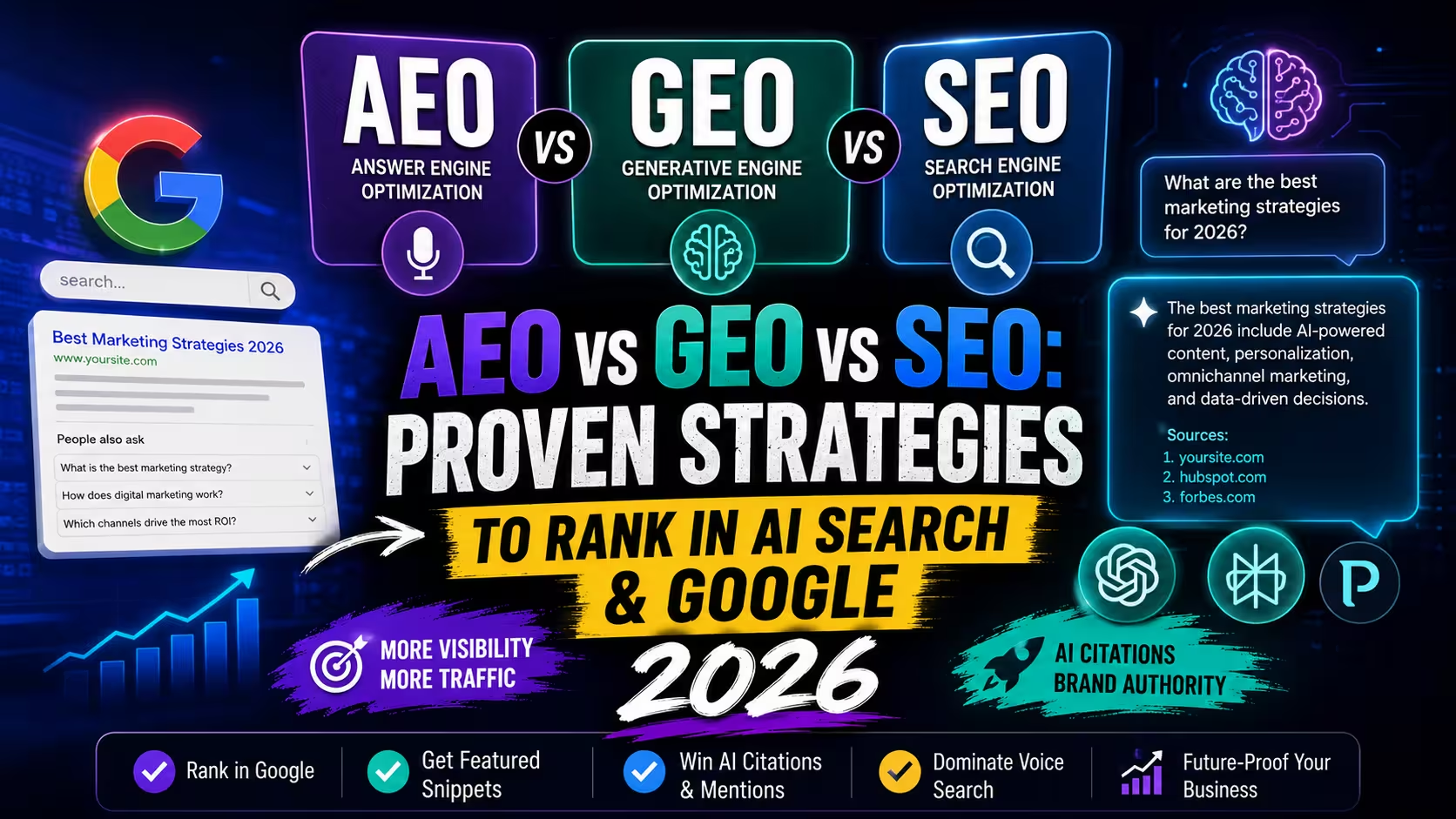
AEO vs GEO vs SEO: Search is changing faster than ever before. Your website might rank well on Google today. But tomorrow, AI systems like Perplexity AI and ChatGPT Search could be answering your customers’ questions without sending them to your site at all.
This shift creates a massive problem for businesses. Traditional search engine optimization isn’t enough anymore. You’re competing not just for rankings but for visibility across answer engines and generative AI platforms.
The solution? Understanding three distinct optimization strategies: SEO, AEO, and GEO. Each serves different search platforms and user behaviors. Together, they form a complete visibility strategy for 2026 and beyond.
Confused about optimizing for AI search? TrySaleBooster specializes in future-proof SEO strategies that work across traditional search engines and AI platforms.
What Is SEO (Search Engine Optimization)?
Search engine optimization is the practice of improving your content and website to rank higher in traditional search engines. Google, Bing, Yandex, Yahoo, and DuckDuckGo all use algorithms to evaluate and rank web pages.
SEO focuses on technical factors, content quality, and authority signals. The goal is simple: appear at the top of search results when people look for information, products, or services.
Core SEO Elements
- Keyword research and strategic placement throughout content
- High-quality backlinks from authoritative websites
- Technical optimization including site speed and mobile responsiveness
- User experience signals like bounce rate and time on page
- Content depth and comprehensiveness for search intent
- Structured data markup for enhanced search features
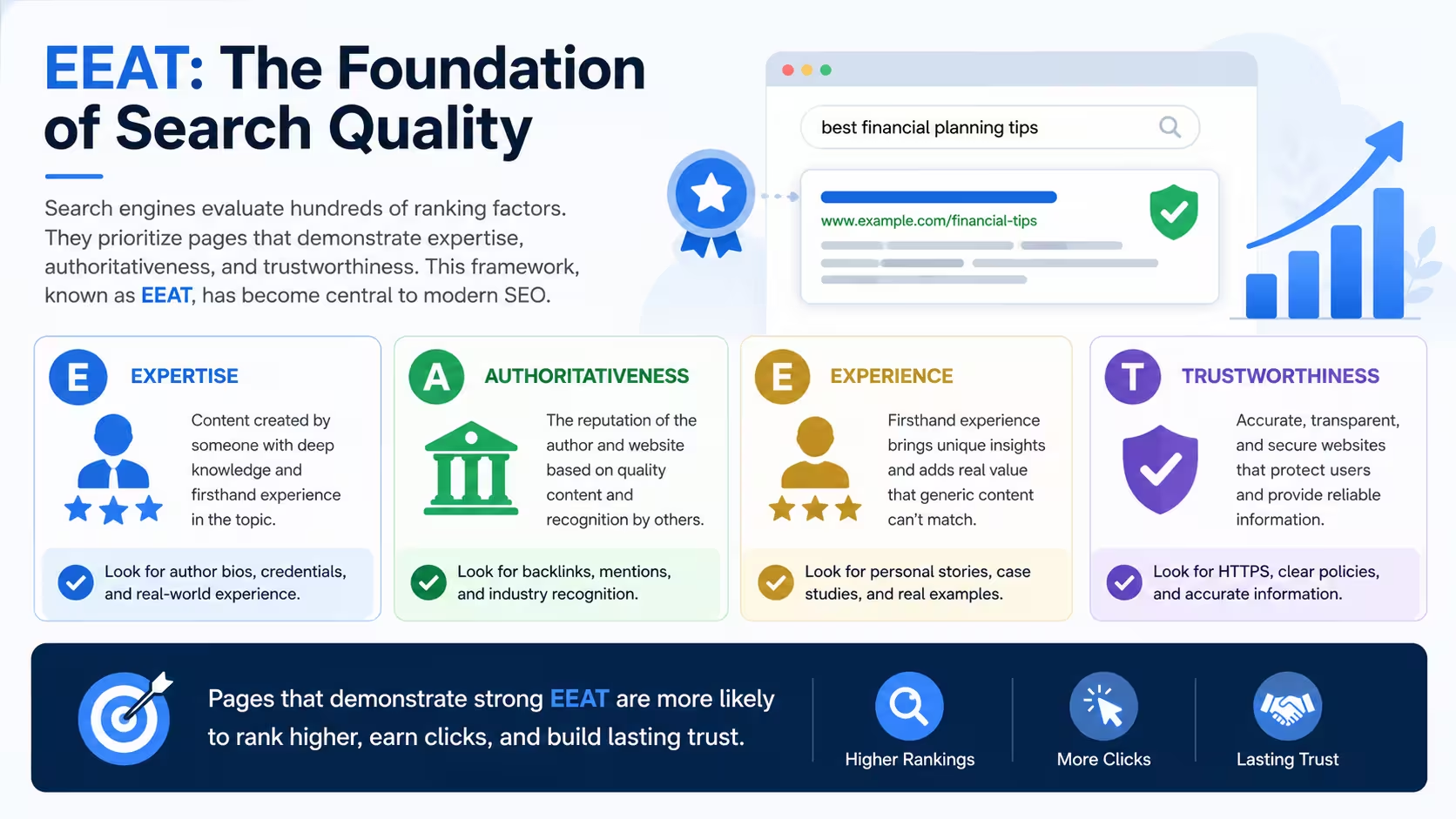
Search engines evaluate hundreds of ranking factors. They prioritize pages that demonstrate expertise, authoritativeness, and trustworthiness. This framework, known as EEAT, has become central to modern SEO
How Search Engines Rank Content
Google and other search engines use crawlers to discover and index web pages. These bots analyze content structure, quality signals, and relevance to user queries.
The ranking process involves natural language processing to understand semantic meaning. Search engines don’t just match keywords anymore. They interpret user intent and context.
Authority plays a crucial role. Sites with strong backlink profiles and established expertise tend to rank higher. Domain age, content freshness, and engagement metrics also influence rankings.
SEO Success Metrics
- Organic traffic growth from search engines
- Keyword rankings for target search terms
- Click-through rates from search results pages
- Domain authority and backlink acquisition rate
- Conversion rates from organic search visitors
Traditional SEO remains valuable. Most online experiences still begin with a search query. But relying solely on traditional search engine optimization means missing opportunities in emerging search platforms.
What Is AEO (Answer Engine Optimization)?
Answer Engine Optimization targets platforms that provide direct answers to user queries. Instead of showing a list of links, answer engines deliver immediate responses.
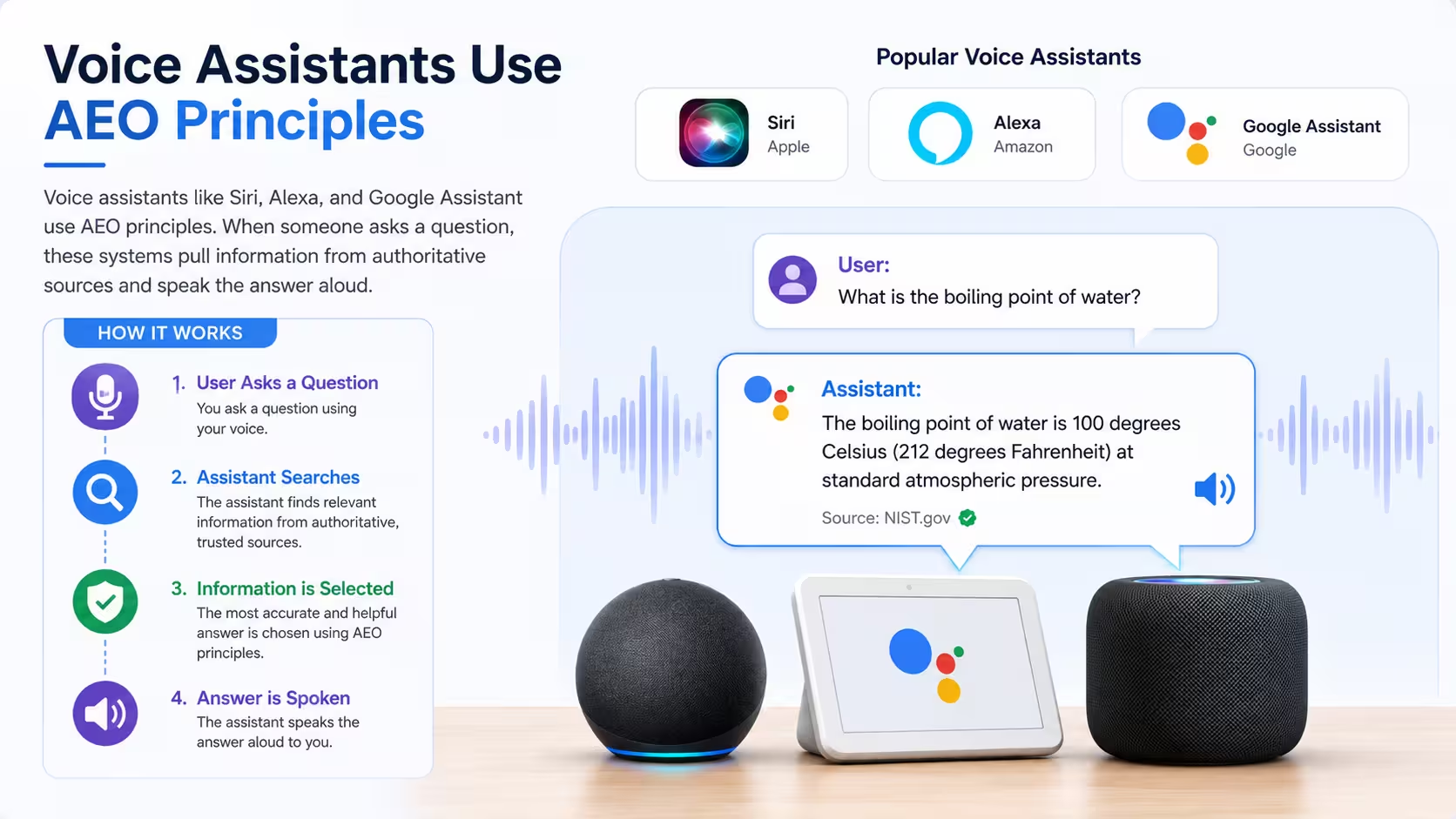
Voice assistants like Siri, Alexa, and Google Assistant use AEO principles. When someone asks a question, these systems pull information from authoritative sources and speak the answer aloud.
How Answer Engines Work
Answer engines prioritize concise, factual information. They extract content from featured snippets, knowledge panels, and structured data. The goal is delivering accurate answers without requiring users to click through to websites.
Google’s featured snippets demonstrate AEO in action. These boxes appear at the top of search results. They provide direct answers to questions like “What is generative engine optimization?” or “How does schema markup work?”
AEO Optimization Strategies
- Structure content in question-and-answer format for easy extraction
- Use concise paragraphs with definitive answers in opening sentences
- Implement FAQ schema markup for enhanced visibility
- Target conversational, long-tail keywords people actually speak
- Create content that directly addresses specific user questions
- Optimize for voice search queries and natural language patterns
Answer engines favor authoritative sources. Building domain expertise through comprehensive content helps your site become a preferred answer source.
Voice Search and AEO
Voice search queries differ from typed searches. People use natural, conversational language. Instead of searching “best pizza Chicago,” voice users ask “Where’s the best pizza near me?”
This shift requires different content strategies. Answer-focused content performs better in voice search results. Short, direct answers win featured snippets and voice assistant responses.
Key Insight: Answer Engine Optimization prioritizes being the source of information rather than the destination. Your brand gains visibility through citations and voice responses, even without direct website visits.
AEO Platforms and Channels
- Google featured snippets and knowledge panels
- Amazon Alexa skills and responses
- Apple Siri information sources
- Google Assistant voice answers
- Microsoft Cortana search responses
Each platform has unique content preferences. However, clear structure, authoritative information, and schema markup improve performance across all answer engines.
What Is GEO (Generative Engine Optimization)?
Generative Engine Optimization focuses on AI-powered platforms that create original content in response to queries. Unlike traditional search engines that show links or answer engines that extract existing content, generative engines synthesize information from multiple sources.
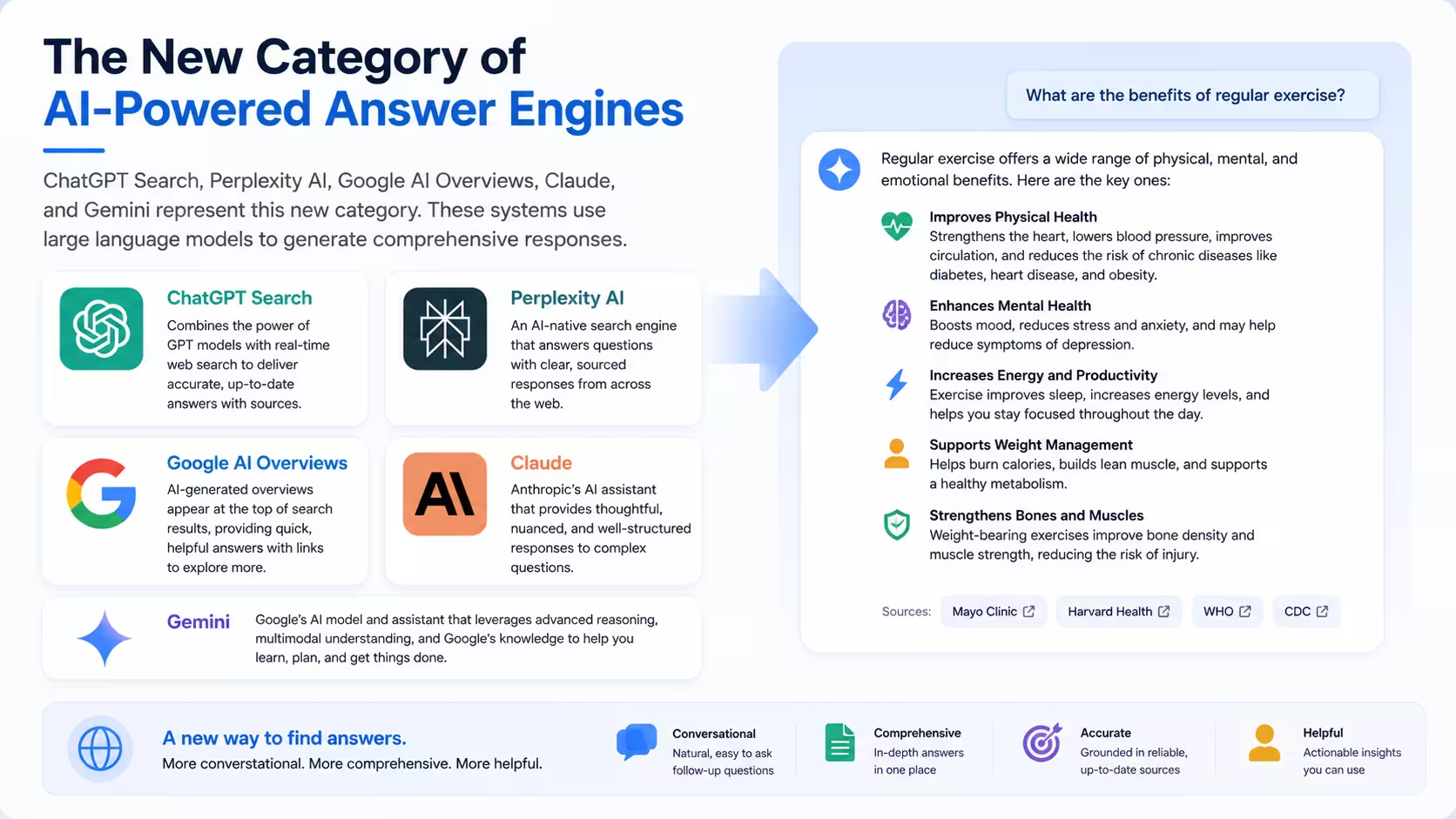
ChatGPT Search, Perplexity AI, Google AI Overviews, Claude, and Gemini represent this new category. These systems use large language models to generate comprehensive responses.
How Generative Engines Differ
Generative AI platforms don’t just find and display content. They understand context, synthesize information, and create new text that answers complex questions.
When someone asks Perplexity AI about optimization strategies, it reads multiple sources. Then it generates a unique response combining insights from different pages. The platform cites sources but creates original explanatory content.
Why GEO Matters for Visibility
AI search tools are growing rapidly. ChatGPT has over 200 million weekly active users. Perplexity AI processes millions of queries daily. Google AI Overviews appear for a significant percentage of searches.
If your content isn’t optimized for these platforms, you’re missing massive visibility opportunities. Generative engines can drive brand awareness even without direct traffic.
GEO Optimization Techniques
- Create comprehensive, authoritative content that AI systems trust
- Use clear semantic structure with proper heading hierarchy
- Include factual, verifiable information with supporting data
- Build topical authority through interconnected content clusters
- Implement entity-based SEO to help AI understand your expertise
- Ensure content is easily parseable by AI crawlers
- Focus on E-E-A-T signals that AI systems evaluate
Generative engines prioritize certain content characteristics. They favor pages with clear expertise indicators, recent publication dates, and strong citation profiles from other authoritative sources.
Getting Cited by AI Platforms
Citation in AI-generated responses is the new currency of digital visibility. When Perplexity AI or ChatGPT Search cites your content, it validates your authority.
Is Your Traffic Declining Despite Strong Content?
AI search engines are reshaping organic visibility. Get a custom AI SEO audit from TrySaleBooster to discover what’s working and what needs optimization for generative engines, answer platforms, and traditional search.
Get Your Free AI SEO AuditChat on WhatsApp
AI Search Ranking Factors
Large language models evaluate content differently than traditional algorithms. They prioritize semantic relevance, contextual understanding, and information accuracy.
Entity recognition plays a crucial role. AI systems identify and understand entities like people, organizations, concepts, and locations. Content with clear entity relationships performs better.
- Content comprehensiveness and depth of coverage
- Factual accuracy and verifiable information
- Source authority and domain reputation
- Semantic clarity and natural language quality
- Recency and content freshness signals
Key Differences Between AEO, GEO, and SEO
Understanding the distinctions between these optimization strategies is essential for building a complete visibility approach. Each serves different platforms and user behaviors.
| Feature | Traditional SEO | AEO | GEO |
| Main Goal | Rank high in search results to drive website traffic | Become the direct answer source for voice and featured snippets | Get cited by AI platforms in generated responses |
| Search Platforms | Google, Bing, Yahoo, Yandex, DuckDuckGo | Voice assistants, featured snippets, knowledge panels | ChatGPT Search, Perplexity AI, Google AI Overviews, Gemini, Claude |
| Ranking Signals | Backlinks, keywords, technical factors, user experience | Direct answers, FAQ structure, schema markup, conversational content | Authority, entity recognition, semantic clarity, topical expertise |
| Content Style | Comprehensive articles optimized for keywords and engagement | Question-answer format with concise, definitive responses | Authoritative, data-rich content with clear structure and entities |
| AI Citation Potential | Low – focuses on SERP rankings | Medium – may be extracted for direct answers | High – specifically designed for AI source citation |
| Best Use Case | Driving targeted traffic to websites and landing pages | Building brand visibility through voice search and quick answers | Establishing authority and visibility in AI-generated content |
| Conversion Potential | High – users visit your site directly | Low to Medium – brand awareness without clicks | Medium – authority building leads to brand search increases |
| Time to Results | 3-6 months for competitive keywords | 1-3 months for featured snippet optimization | 2-4 months for AI platform recognition |
Platform Coverage Differences
SEO covers traditional web search. It focuses on desktop and mobile browsers where users actively search for information. The goal is appearing in the top organic results.
AEO targets zero-click searches. These queries get answered directly in search results or through voice assistants. Users receive information without visiting websites.
GEO addresses AI-powered conversational platforms. Users ask complex questions and receive synthesized, comprehensive answers. The platform generates new content rather than displaying existing pages.
Content Optimization Approaches
Each strategy requires different content characteristics. SEO content balances comprehensiveness with keyword optimization. It targets specific search queries while maintaining natural readability.
AEO content prioritizes directness. The first sentence should answer the question completely. Additional context follows, but the immediate answer comes first.
GEO content emphasizes authority and comprehensiveness. It demonstrates expertise through depth, citations, and original insights. The content must be substantial enough for AI systems to trust and cite.
Ready to Optimize for All Search Platforms?
From Google AI Overviews to Perplexity AI citations, TrySaleBooster implements complete optimization strategies that cover AEO, GEO, and traditional SEO together.
Why Traditional SEO Alone Is No Longer Enough
The search landscape has fundamentally changed. Traditional search engine rankings still matter, but they no longer guarantee visibility or traffic.
AI-powered platforms are capturing an increasing share of search queries. Google AI Overviews appear for millions of searches daily. ChatGPT Search and Perplexity AI are becoming primary research tools for many users.
The Zero-Click Search Problem
More searches end without a click. Google answers questions directly through featured snippets, knowledge panels, and AI Overviews. Users get their information without visiting any website.
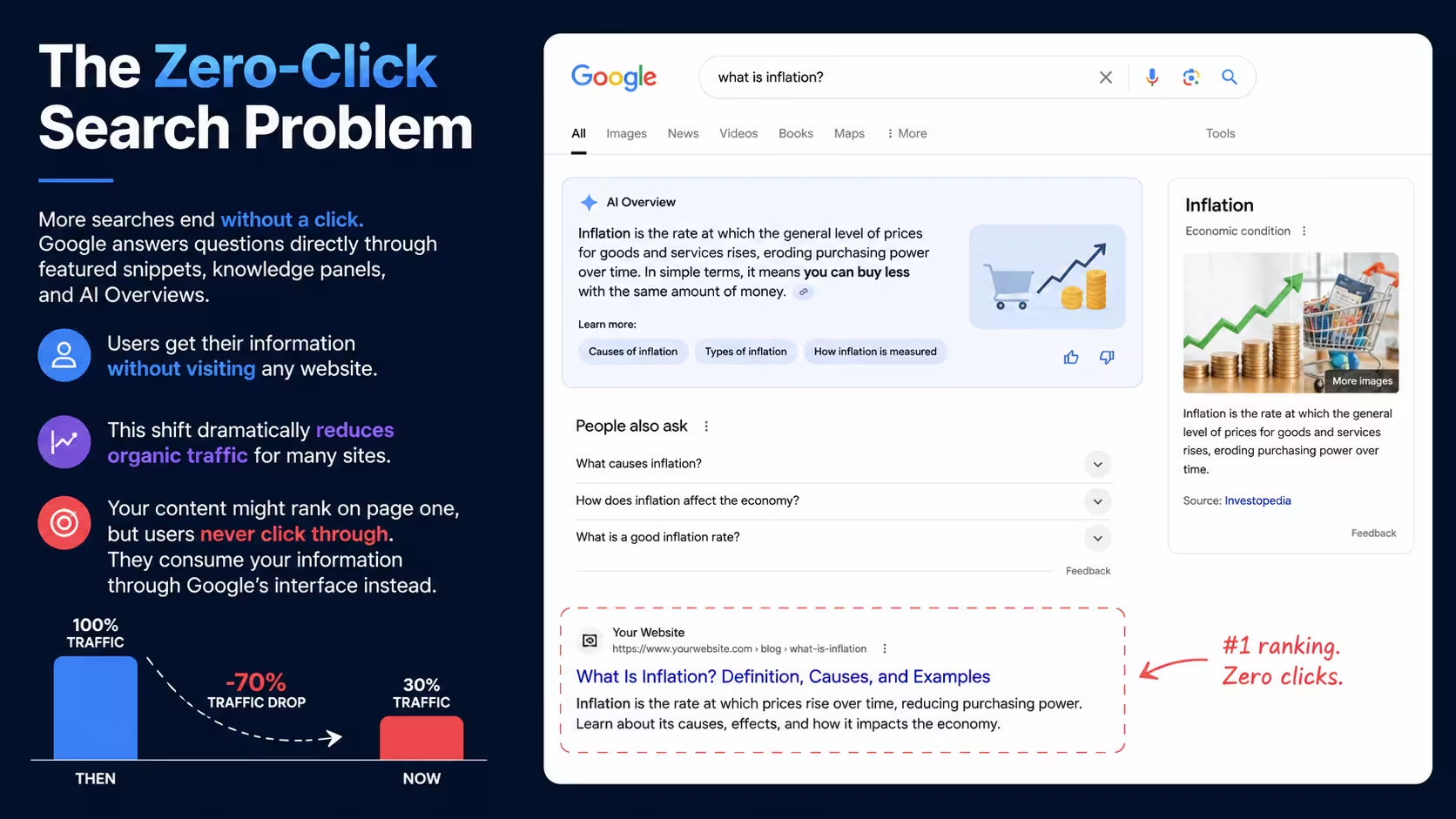
More searches end without a click. Google answers questions directly through featured snippets, knowledge panels, and AI Overviews. Users get their information without visiting any website.
This shift dramatically reduces organic traffic for many sites. Your content might rank on page one, but users never click through. They consume your information through Google’s interface instead.
AI Search Adoption Trends
- ChatGPT Search gaining millions of daily active users
- Perplexity AI processing over 230 million queries monthly
- Google AI Overviews appearing for 15% of all searches
- Voice search accounting for 20% of mobile queries
- AI-powered research tools becoming default for younger demographics
These platforms represent the future of search. Ignoring them means losing visibility among growing user segments.
Competitive Disadvantage Risks
Businesses that adapt to AI search optimization gain significant advantages. They appear in more places, build stronger authority, and capture emerging search traffic.
Companies relying solely on traditional SEO face declining visibility. Their competitors appear in AI responses, featured snippets, and voice search results while they remain limited to standard organic listings.
User Behavior Shifts
People increasingly trust AI-generated answers. They view platforms like Perplexity AI as research assistants rather than simple search tools. This changes how brands need to approach visibility.
Younger users often skip traditional search entirely. They ask ChatGPT or Claude directly. If your brand isn’t visible in these systems, you’re invisible to significant market segments.
How AI Search Engines Work
Understanding AI search mechanics helps optimize content effectively. These systems operate differently than traditional search algorithms.
AI search engines use large language models trained on vast amounts of text data. They understand context, semantic meaning, and relationships between concepts.
Natural Language Processing in AI Search
Natural language processing enables AI systems to comprehend human language nuances. They don’t just match keywords. They understand intent, context, and implied meaning.
When a user asks “What’s better for ecommerce visibility in 2026?” the AI understands this asks about future optimization strategies. It doesn’t just look for pages containing those exact words.
How AI Systems Evaluate Content
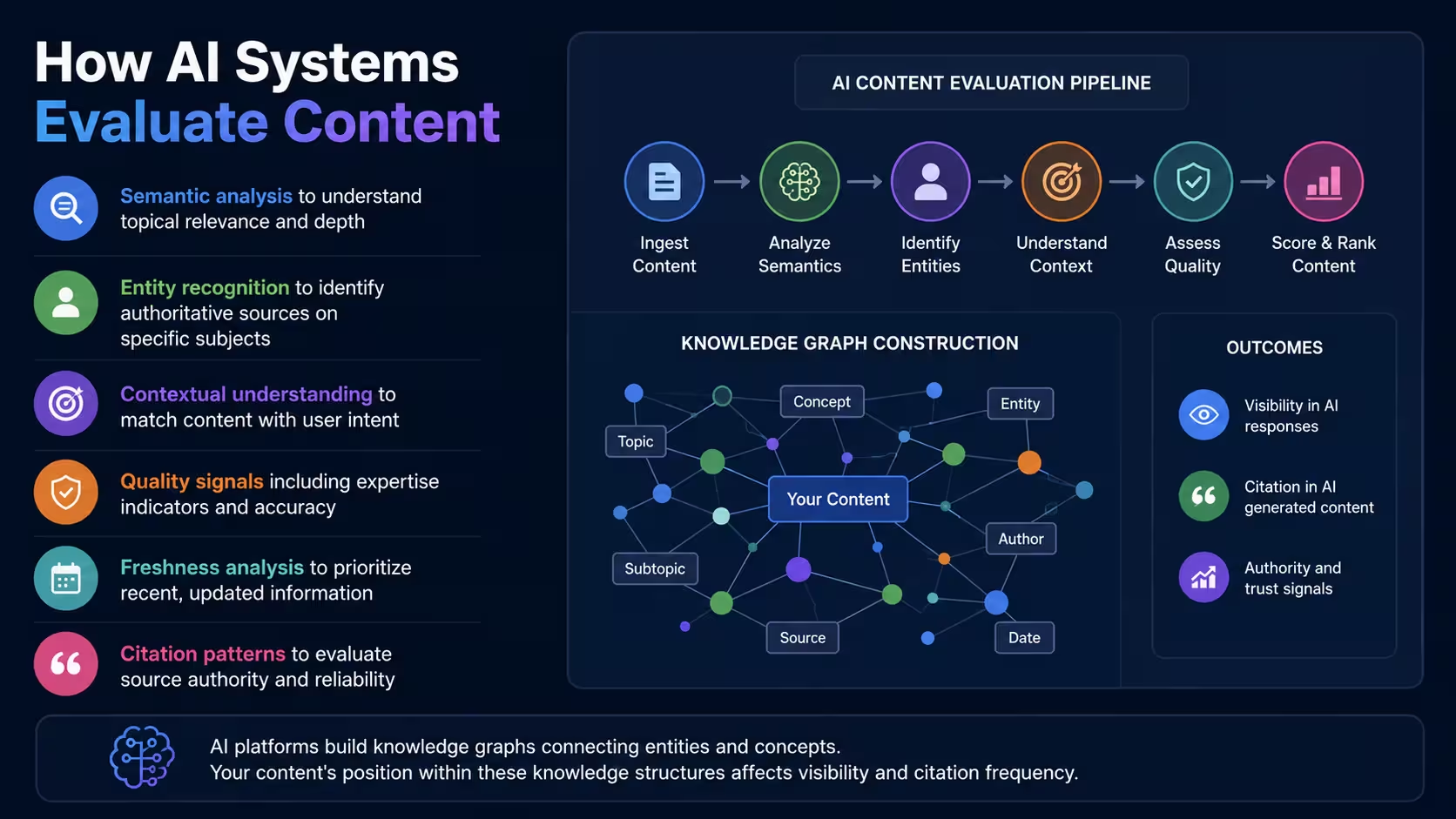
- Semantic analysis to understand topical relevance and depth
- Entity recognition to identify authoritative sources on specific subjects
- Contextual understanding to match content with user intent
- Quality signals including expertise indicators and accuracy
- Freshness analysis to prioritize recent, updated information
- Citation patterns to evaluate source authority and reliability
AI platforms build knowledge graphs connecting entities and concepts. Your content’s position within these knowledge structures affects visibility and citation frequency.
The Role of Training Data
AI models learn from massive text datasets. Content that appears in training data influences model responses. However, many modern AI systems also retrieve current information from the web.
This retrieval-augmented generation combines learned knowledge with real-time web searches. The AI generates responses using both its training and fresh information from authoritative sources.
How Perplexity AI Finds and Cites Sources
Perplexity AI has become a leading answer engine. Understanding its source selection process helps optimize for visibility.
The platform combines search technology with generative AI. It searches the web in real-time, then synthesizes information into comprehensive answers with citations.
Perplexity’s Source Selection Criteria
Perplexity evaluates multiple factors when choosing sources to cite. Authority and relevance are primary considerations.
- Domain authority based on backlink profiles and reputation
- Content freshness and recent publication dates
- Topical relevance to the specific query
- Information completeness and depth
- Page structure and clarity of information presentation
- Absence of intrusive advertising or poor user experience
Pages that clearly answer questions get prioritized. Perplexity favors content with direct, factual information over promotional material.
Getting Cited by Perplexity AI
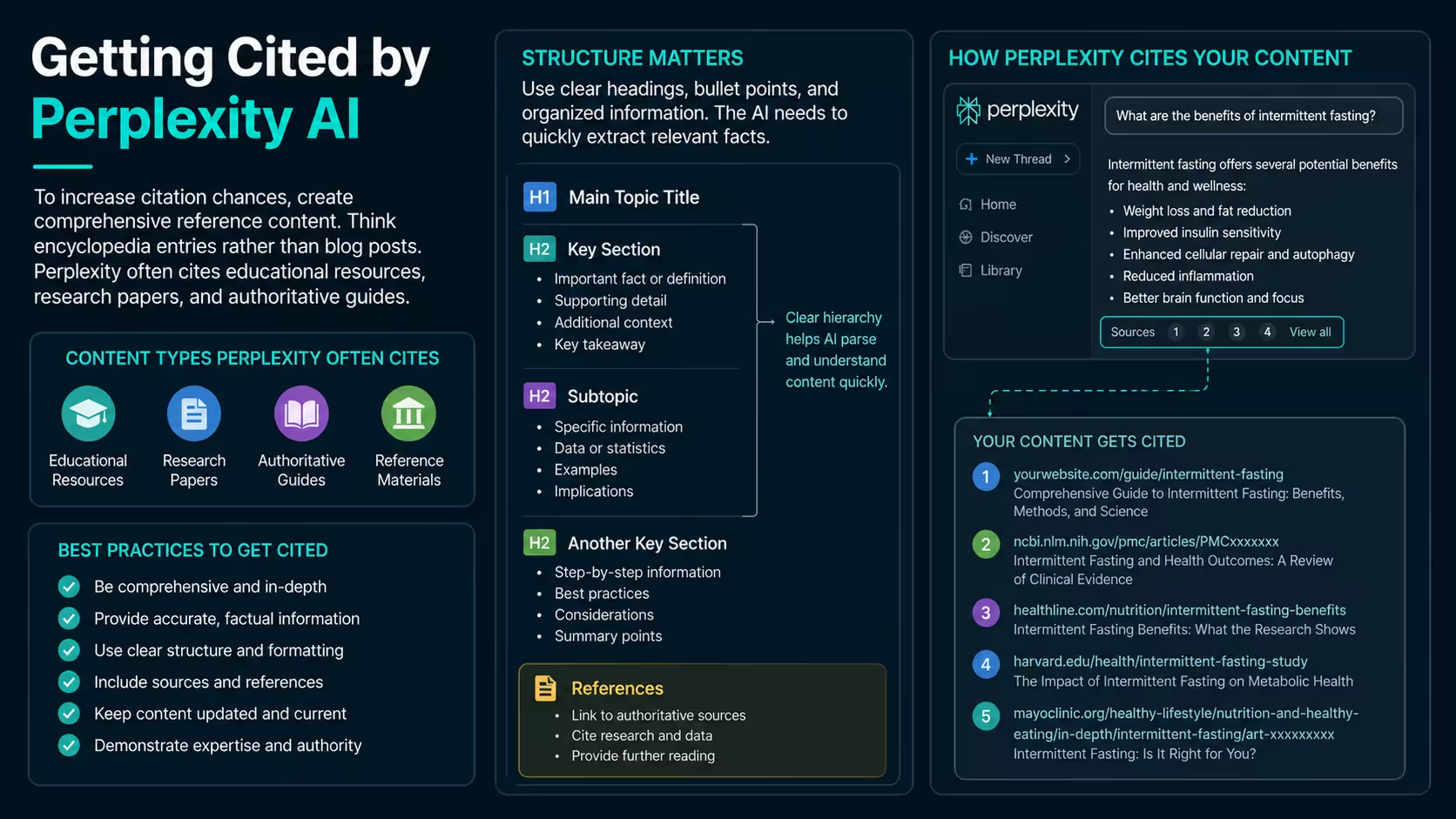
To increase citation chances, create comprehensive reference content. Think encyclopedia entries rather than blog posts. Perplexity often cites educational resources, research papers, and authoritative guides.
Structure matters significantly. Use clear headings, bullet points, and organized information. The AI needs to quickly extract relevant facts.
Perplexity SEO Best Practices
- Create definitive, authoritative content on specific topics
- Use factual, verifiable information with data support
- Maintain clear, scannable content structure
- Update content regularly to maintain freshness signals
- Build topical authority through interconnected content
- Ensure fast page load times and excellent user experience
Perplexity citations drive brand visibility even without direct traffic. Users see your domain repeatedly across queries, building recognition and trust.
How Google AI Overviews Select Content
Google AI Overviews represent Google’s answer to AI search competition. These AI-generated summaries appear above traditional search results for many queries.
The system uses Google’s Search Generative Experience technology. It analyzes multiple web pages, then creates a synthesized answer with source links.
AI Overview Triggering Factors
Google doesn’t show AI Overviews for every search. They appear primarily for informational queries where comprehensive answers add value.
Complex questions trigger AI Overviews more frequently. Simple navigational searches or transactional queries typically don’t generate them.
Content Selection for AI Overviews
Google’s AI selects content based on traditional ranking signals plus additional factors specific to AI-generated content.
- High EEAT scores indicating expertise and trustworthiness
- Comprehensive coverage of the topic or query
- Multiple quality backlinks from authoritative domains
- Clear, well-structured content organization
- Fresh, recently updated information
- Strong user engagement metrics
Optimizing for Google AI Overviews
Focus on comprehensive, authoritative content that thoroughly addresses user intent. Google’s AI favors pages that answer questions completely.
Use structured data markup to help Google understand your content’s purpose and structure. Schema markup for articles, FAQs, and how-tos improves visibility chances.
Build strong topical authority. Pages from domains recognized as authorities on specific subjects get prioritized for AI Overview citations.
Best Content Structure for AI Search Optimization
AI systems parse and evaluate content structure differently than humans. Optimal structure makes information easily extractable for AI platforms.
Heading Hierarchy Importance
Proper heading structure helps AI understand content organization. Use H1 for the main title, H2 for major sections, and H3 for subsections.
Each heading should clearly indicate the content that follows. AI systems use headings as signals for content topics and structure.
- One H1 per page as the primary topic indicator
- Descriptive H2 headings for each major section
- H3 and H4 headings for logical subsections
- Include target keywords naturally in headings
- Maintain consistent hierarchy without skipping levels
Paragraph and Sentence Structure
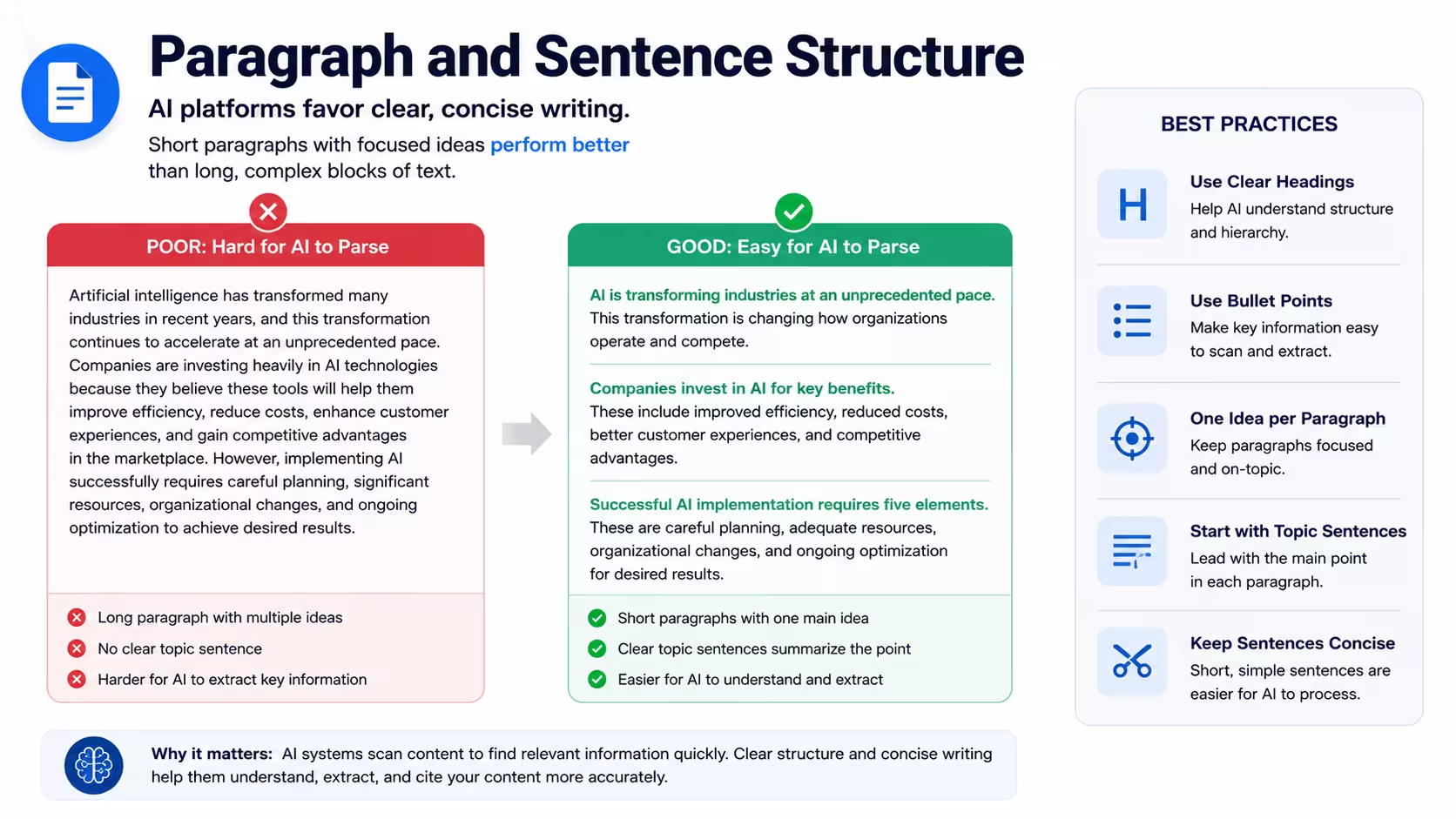
AI platforms favor clear, concise writing. Short paragraphs with focused ideas perform better than long, complex blocks of text.
Start paragraphs with topic sentences that summarize the main point. This helps AI systems quickly understand and extract key information.
Lists and Structured Data
Bulleted and numbered lists make information easily scannable. AI systems can quickly extract list items as discrete facts or steps.
Use lists for features, benefits, steps, or any information that can be broken into components. This structure improves both readability and AI parsing.
Tables for Comparison Data
Tables organize comparative information effectively. AI platforms excel at extracting and presenting tabular data.
Use tables for specifications, comparisons, pricing, or any data that naturally fits a grid structure. Ensure proper table markup with headers for accessibility and AI comprehension.
Need Expert Help Implementing AI Search Optimization?
TrySaleBooster’s AI SEO specialists help ecommerce brands and businesses dominate in traditional and AI-powered search results. Get your customized optimization strategy today.
Get Your Custom StrategyMessage on WhatsApp
Entity SEO Explained: Building Topical Authority
Entity-based SEO focuses on concepts and things rather than just keywords. AI search systems understand entities and their relationships.
An entity is any distinct, identifiable thing. People, organizations, locations, products, and concepts all qualify as entities. Google’s Knowledge Graph contains billions of entities and their connections.
Why Entities Matter for AI Search
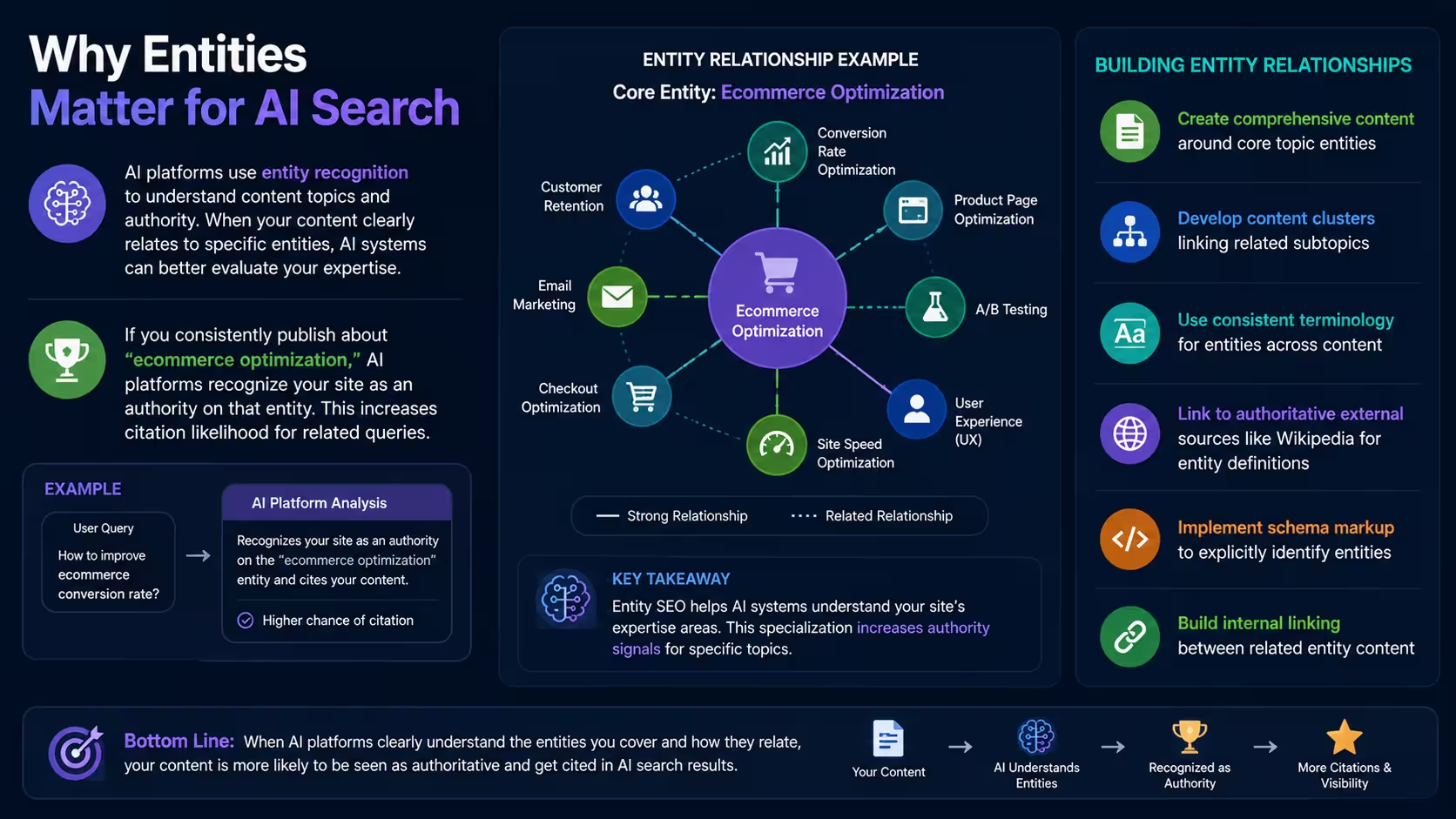
AI platforms use entity recognition to understand content topics and authority. When your content clearly relates to specific entities, AI systems can better evaluate your expertise.
If you consistently publish about “ecommerce optimization,” AI platforms recognize your site as an authority on that entity. This increases citation likelihood for related queries.
Building Entity Relationships
- Create comprehensive content around core topic entities
- Develop content clusters linking related subtopics
- Use consistent terminology for entities across content
- Link to authoritative external sources like Wikipedia for entity definitions
- Implement schema markup to explicitly identify entities
- Build internal linking between related entity content
Entity SEO helps AI systems understand your site’s expertise areas. This specialization increases authority signals for specific topics.
Structured Data for Entity Recognition
Schema markup helps AI platforms identify entities in your content. Use Organization schema for company information, Person schema for authors, and Article schema for content pieces.
Product schema for ecommerce items, FAQ schema for question-answer content, and Review schema for ratings all help AI systems understand content structure and entities.
Semantic SEO for AI Search Success
Semantic SEO focuses on meaning and intent rather than exact keyword matching. This approach aligns perfectly with how AI search systems evaluate content.
Semantic search understands relationships between words and concepts. It recognizes that “purchase,” “buy,” and “order” convey similar meanings in commercial contexts.
How Semantic Search Works
AI systems use vector embeddings to represent words and concepts mathematically. Semantically similar terms have similar vector representations.
This means AI platforms can match content to queries even without exact keyword matches. Content covering related concepts ranks for semantic variations of target queries.
Semantic SEO Optimization Strategies
- Cover topics comprehensively rather than targeting single keywords
- Use natural language and semantic variations
- Include related concepts and supporting topics
- Answer related questions users might have
- Build context through thorough explanations
- Connect ideas logically throughout content
Semantic optimization improves visibility for long-tail variations. Your content can rank for hundreds of related queries you never explicitly targeted.
Latent Semantic Indexing Concepts
Latent semantic indexing identifies relationships between terms and concepts. Content that includes semantically related terms signals comprehensive topic coverage.
For “generative engine optimization,” related terms might include “large language models,” “AI search,” “content synthesis,” and “citation optimization.” Including these naturally improves semantic relevance.
Building Topical Authority for AI Recognition
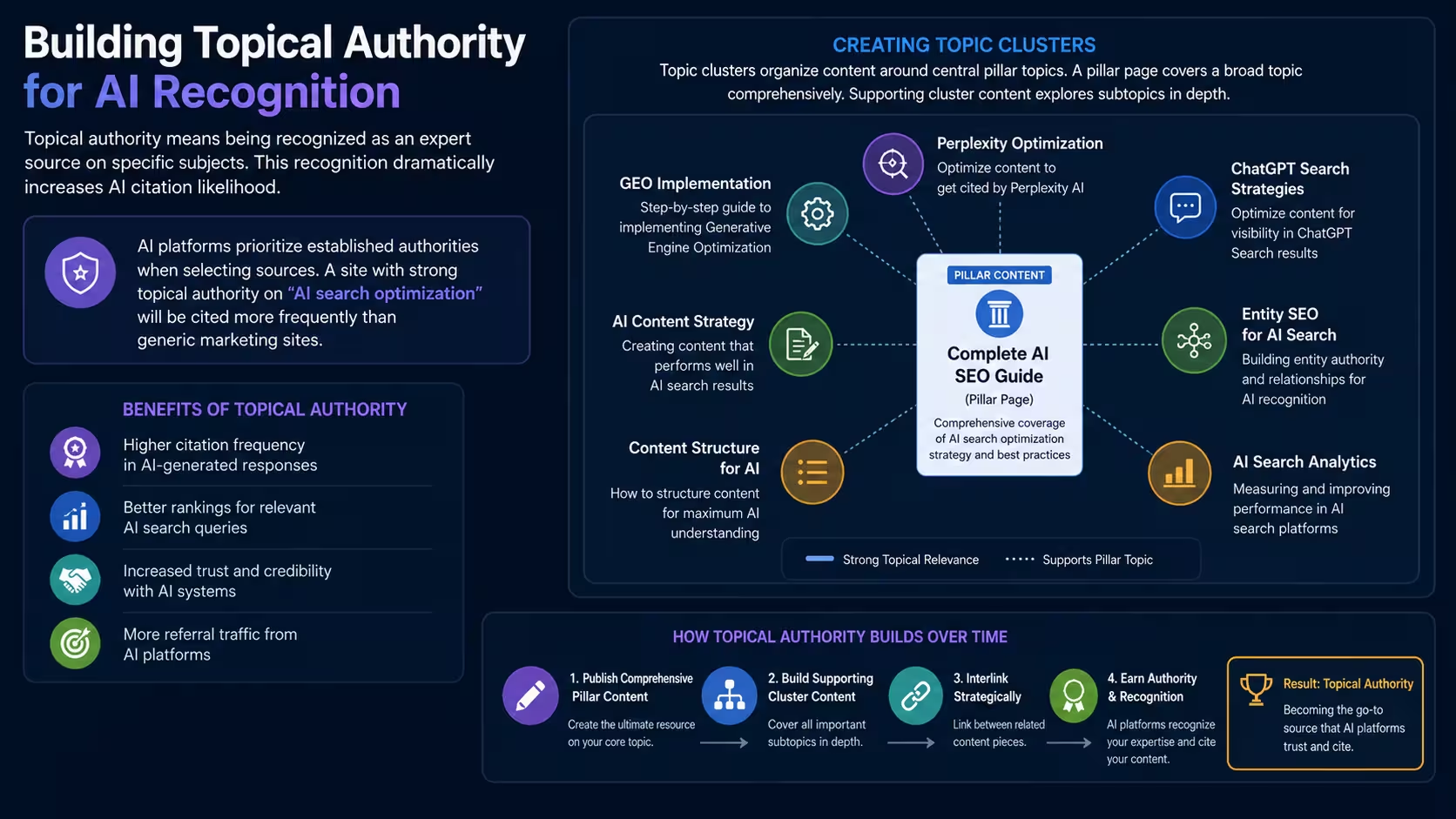
Topical authority means being recognized as an expert source on specific subjects. This recognition dramatically increases AI citation likelihood.
AI platforms prioritize established authorities when selecting sources. A site with strong topical authority on “AI search optimization” will be cited more frequently than generic marketing sites.
Creating Topic Clusters
Topic clusters organize content around central pillar topics. A pillar page covers a broad topic comprehensively. Supporting cluster content explores subtopics in depth.
For AI search optimization, a pillar page might cover “Complete AI SEO Guide.” Cluster content would include pages on specific aspects like “Perplexity optimization,” “ChatGPT Search strategies,” and “GEO implementation.”
Content Depth and Comprehensiveness
Authoritative content demonstrates expertise through depth and detail. Superficial articles don’t build topical authority.
- Create long-form comprehensive guides on core topics
- Include original research, data, and insights
- Address common questions thoroughly
- Provide actionable, practical information
- Update content regularly with new information
- Cite authoritative external sources
Consistent publishing around specific topics signals focused expertise. AI systems recognize patterns of specialized content over time.
Demonstrating Expertise Signals
Google’s EEAT framework applies to AI search as well. Demonstrate experience through case studies, results, and specific examples.
Showcase expertise with author credentials, certifications, and industry recognition. Build authoritativeness through quality backlinks and citations. Maintain trustworthiness with accurate, verifiable information.
Structured Data and Schema Markup for AI Optimization
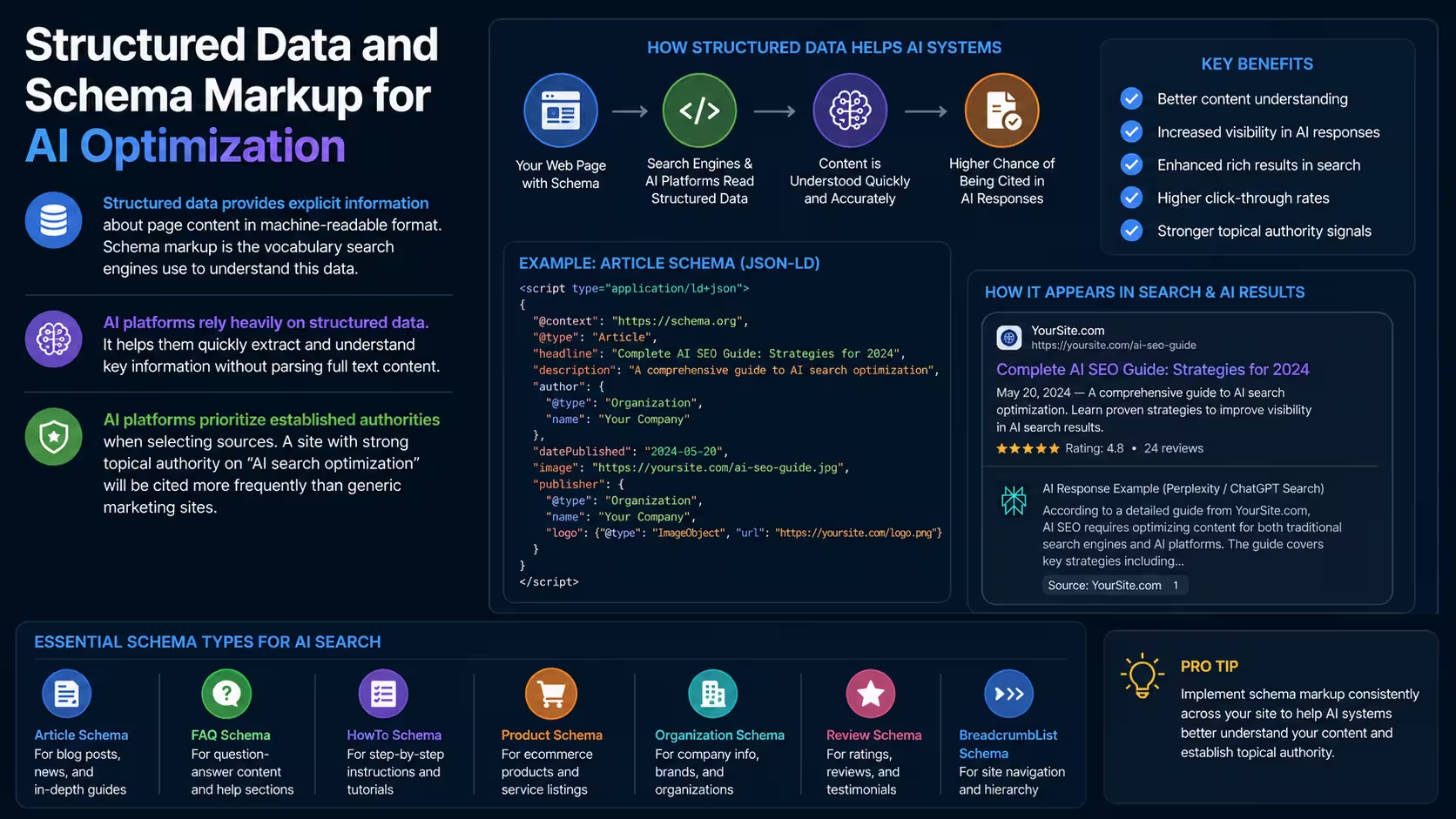
Structured data provides explicit information about page content in machine-readable format. Schema markup is the vocabulary search engines use to understand this data.
AI platforms rely heavily on structured data. It helps them quickly extract and understand key information without parsing full text content.
Essential Schema Types for AI Search
- Article schema for blog posts and guides
- FAQ schema for question-answer content
- HowTo schema for step-by-step instructions
- Product schema for ecommerce items
- Organization schema for company information
- Review schema for ratings and testimonials
- BreadcrumbList schema for site navigation
Implementing multiple relevant schema types on a page provides comprehensive structured information. This maximizes AI platform understanding.
Implementing Schema Markup
JSON-LD is the recommended format for schema markup. It’s easier to implement and maintain than inline microdata.
Place JSON-LD schema in the page head or body. Validate implementation using Google’s Rich Results Test tool to ensure proper formatting.
Schema Benefits for AI Platforms
Structured data enables rich results in traditional search. But for AI platforms, schema provides clear content understanding without ambiguity.
FAQ schema tells AI systems exactly which content answers which questions. Article schema identifies publication dates, authors, and topics clearly. This clarity improves citation likelihood.
Optimizing for Conversational Search Patterns
Conversational search queries differ significantly from traditional keyword searches. Users ask complete questions in natural language.
AI platforms excel at handling conversational queries. They understand context, follow-up questions, and complex multi-part queries.
Conversational Query Characteristics
People use natural speech patterns when asking AI assistants questions. Instead of “best laptop 2026,” they ask “What’s the best laptop I can buy right now?”
These queries are longer, more specific, and often include personal context. They reflect how people actually speak rather than how they type into search boxes.
Optimizing Content for Conversations
- Write in natural, conversational tone
- Answer questions as you would speak them
- Use first and second person perspectives appropriately
- Include question phrases people actually use
- Address follow-up questions users might ask
- Provide context for answers
Think about the conversation flow. What follow-up questions naturally arise? Address these proactively in your content.
Question Research for Conversational Optimization
Tools like AnswerThePublic and AlsoAsked reveal actual questions people ask. These questions inform content creation for conversational search.
Look at “People Also Ask” boxes in Google. These questions represent common user queries. Creating content that answers these questions improves conversational search visibility.
Voice Search vs AI Search: Understanding the Distinction
Voice search and AI search overlap but represent different concepts. Understanding the distinction helps optimize effectively for both.
Voice Search Characteristics
Voice search refers to using voice input to query search engines or assistants. Users speak queries instead of typing them.
Voice searches are typically question-based and conversational. They happen on mobile devices, smart speakers, and voice assistants.
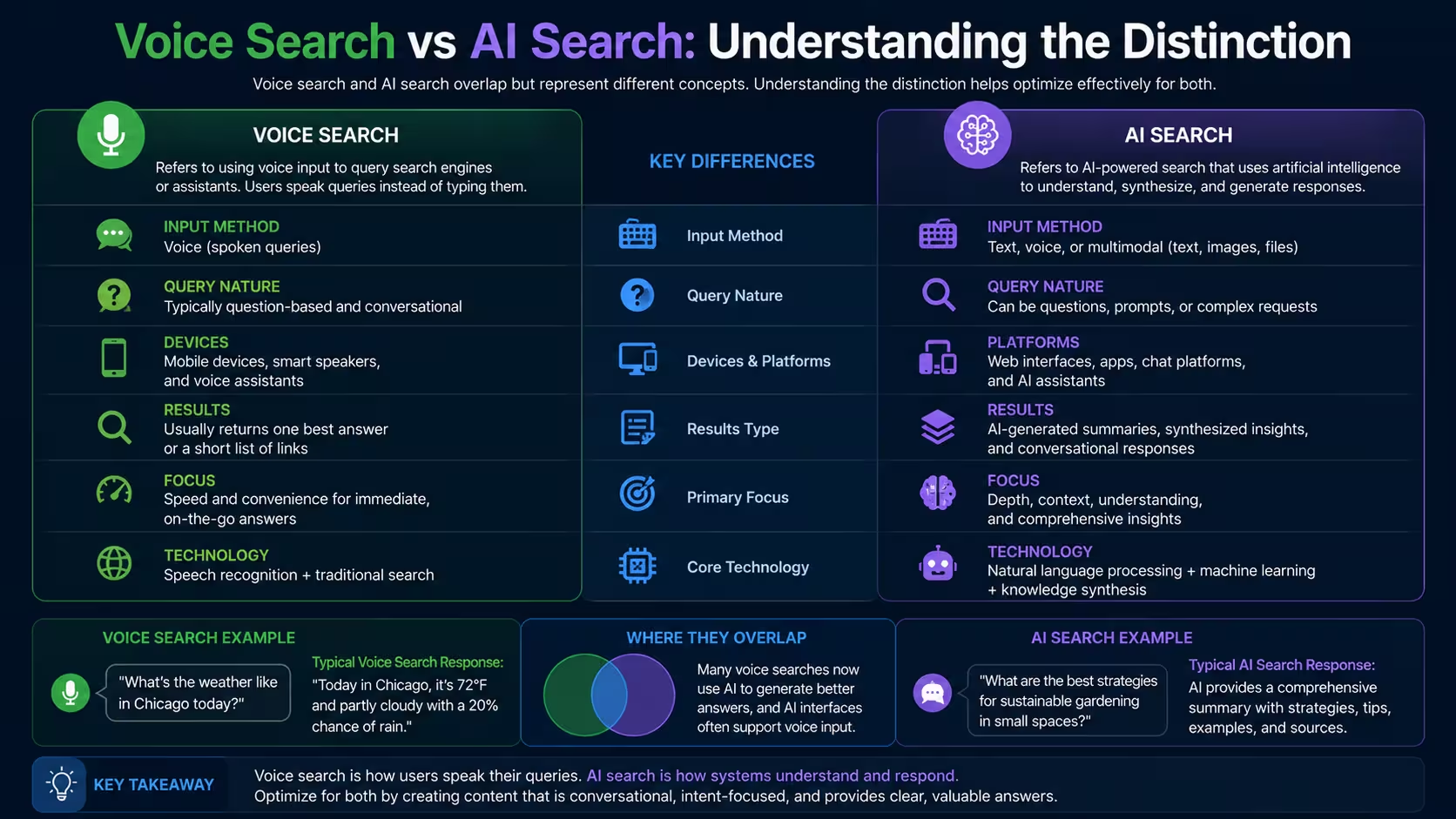
AI Search Characteristics
AI search uses large language models to understand queries and generate responses. Input can be voice or text, but the distinguishing feature is AI-generated answers.
AI search synthesizes information from multiple sources. It creates new content rather than just displaying existing results.
Optimization Differences
Voice search optimization prioritizes featured snippets and local results. Quick, direct answers work best because voice assistants speak single responses.
AI search optimization focuses on authority and comprehensive information. AI platforms cite sources that demonstrate expertise and provide detailed coverage.
- Voice search favors concise, snippet-worthy answers
- AI search values comprehensive, authoritative content
- Voice searches are often local and immediate
- AI searches handle complex, research-oriented queries
Both require natural language optimization. But voice prioritizes brevity while AI search appreciates depth.
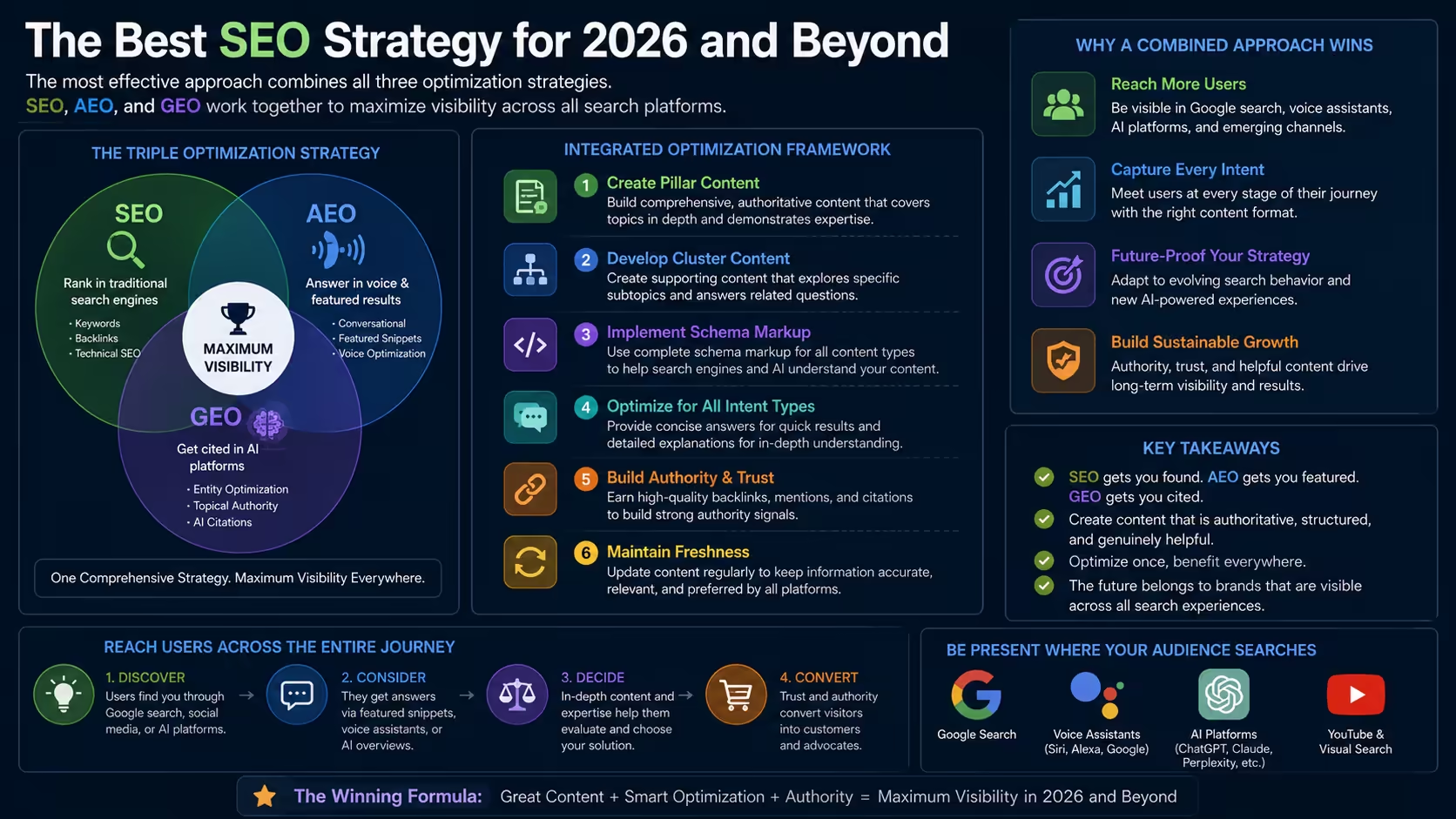
The Best SEO Strategy for 2026 and Beyond
The most effective approach combines all three optimization strategies. SEO, AEO, and GEO work together to maximize visibility across all search platforms.
Businesses need presence in traditional search, voice assistants, and AI platforms. Each channel reaches different users at different stages of their journey.
Integrated Optimization Framework
Start with comprehensive content that serves all three strategies. Create authoritative, in-depth articles that demonstrate expertise.
Structure this content with clear headings, concise answers, and detailed explanations. This structure works for traditional rankings, featured snippets, and AI citations simultaneously.
- Create pillar content covering topics comprehensively
- Develop supporting cluster content for specific subtopics
- Implement complete schema markup for all content types
- Optimize for both concise answers and detailed explanations
- Build strong backlink profiles and authority signals
- Update content regularly to maintain freshness
Platform-Specific Tactics Within Unified Strategy
While creating unified content, apply platform-specific optimizations. Include keyword-optimized title tags for traditional SEO. Add FAQ schema for voice search. Demonstrate comprehensive authority for AI platforms.
One piece of content can serve multiple purposes with proper optimization. A comprehensive guide can rank in Google, provide featured snippet answers, and get cited by Perplexity AI.
Resource Allocation Recommendations
Businesses should allocate resources across all three strategies based on their specific goals and audience behavior.
- 50% effort on traditional SEO and comprehensive content creation
- 25% effort on AEO including featured snippets and voice optimization
- 25% effort on GEO focusing on AI platform visibility
These percentages shift based on industry. Tech-savvy audiences may require more GEO focus. Local businesses might emphasize AEO for voice search.
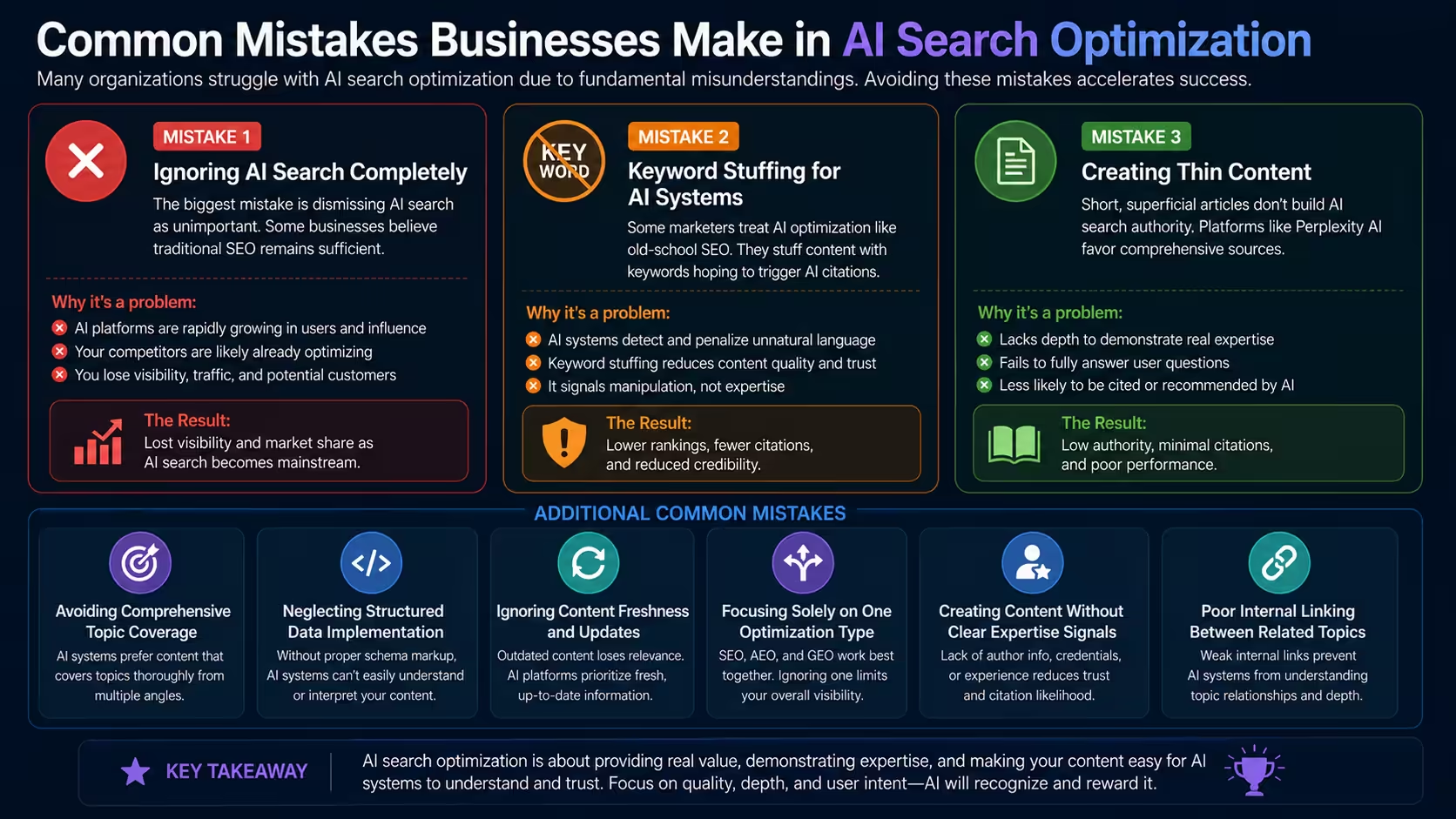
Common Mistakes Businesses Make in AI Search Optimization
Many organizations struggle with AI search optimization due to fundamental misunderstandings. Avoiding these mistakes accelerates success.
Mistake 1: Ignoring AI Search Completely
The biggest mistake is dismissing AI search as unimportant. Some businesses believe traditional SEO remains sufficient.
This approach guarantees lost visibility as AI platforms grow. Early adopters gain significant advantages in AI search rankings and citations.
Mistake 2: Keyword Stuffing for AI Systems
Some marketers treat AI optimization like old-school SEO. They stuff content with keywords hoping to trigger AI citations.
AI systems penalize unnatural language. They prioritize natural, human-written content that demonstrates genuine expertise.
Mistake 3: Creating Thin Content
Short, superficial articles don’t build AI search authority. Platforms like Perplexity AI favor comprehensive sources.
Content needs sufficient depth to demonstrate expertise. Aim for thorough coverage that answers questions completely.
- Avoiding comprehensive topic coverage
- Neglecting structured data implementation
- Ignoring content freshness and updates
- Focusing solely on one optimization type
- Creating content without clear expertise signals
- Poor internal linking between related topics
Mistake 4: Neglecting Technical Infrastructure
Slow page speeds, poor mobile experience, and technical errors hurt AI search visibility. AI platforms consider user experience factors when selecting sources.
Ensure your site loads quickly, works well on mobile devices, and has clean technical implementation.
Mistake 5: Copying Competitor Content
AI platforms detect and devalue duplicate or heavily derivative content. Original insights and unique perspectives earn citations.
Create genuinely original content that adds value beyond what competitors offer. Include proprietary data, case studies, or unique analysis.
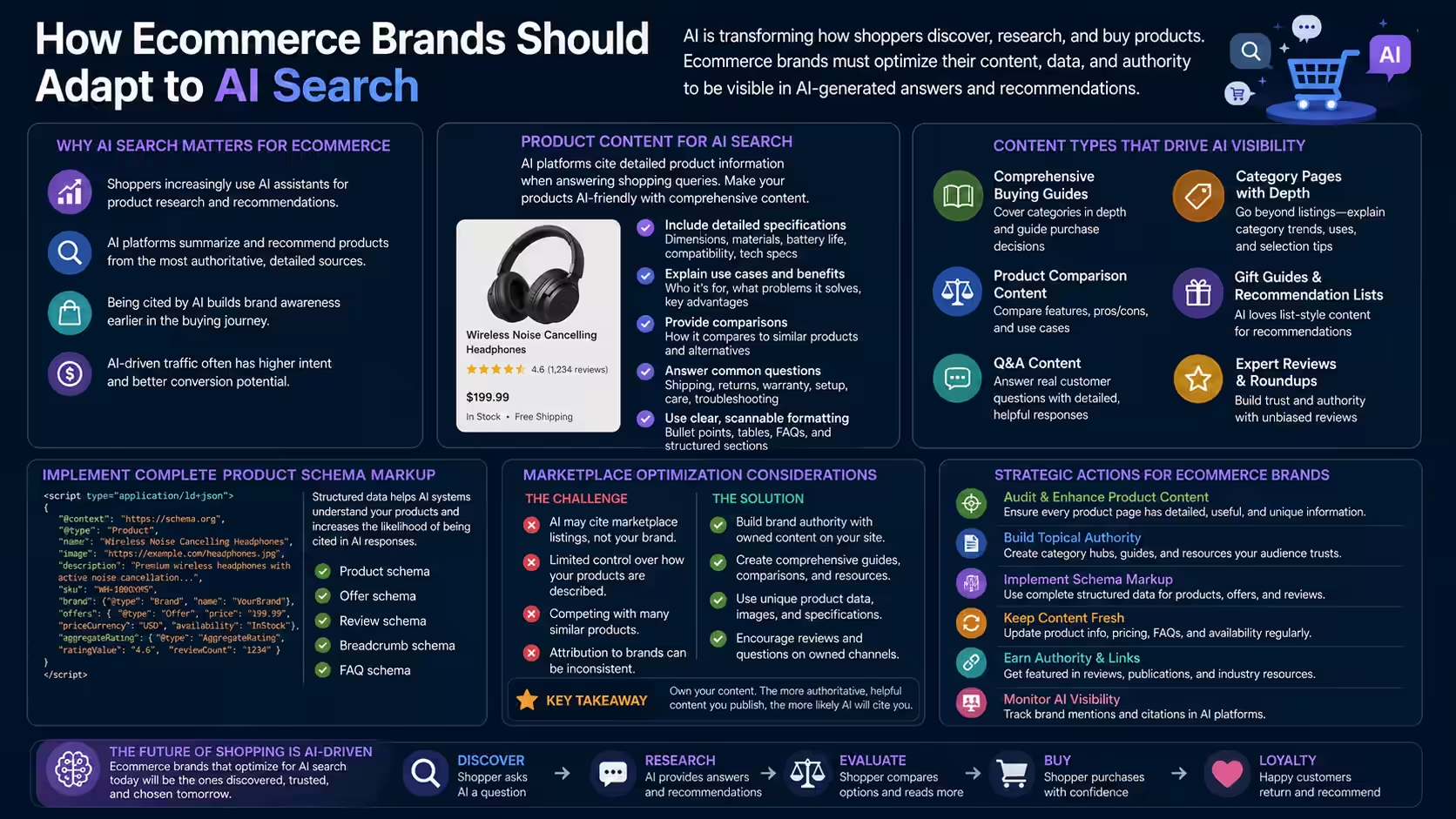
How Ecommerce Brands Should Adapt to AI Search
Ecommerce businesses face unique challenges and opportunities in AI search optimization. Product discovery and purchasing behavior are changing as AI becomes central to shopping research.
Product Content for AI Search
AI platforms cite detailed product information when answering shopping queries. Comprehensive product descriptions help your items appear in AI recommendations.
Include specifications, use cases, comparisons, and benefits in product content. This information becomes quotable by AI systems.
- Create detailed buying guides for product categories
- Develop comparison content for similar products
- Answer common product questions comprehensively
- Implement complete product schema markup
- Build category-level authority content
- Create gift guides and recommendation lists
Marketplace Optimization Considerations
Ecommerce brands on marketplaces like Amazon face additional challenges. AI platforms may cite marketplace listings, but attribution to specific brands varies.
Build brand authority through owned content. Create comprehensive guides, comparison resources, and educational content on your own site. This owned content can be cited alongside marketplace listings.
Building Shopping Authority
Demonstrate shopping expertise through comprehensive category content. Create ultimate buying guides that AI platforms recognize as authoritative.
When users ask “What’s the best X for Y?” AI systems cite comprehensive guides from recognized authorities. Position your brand as that authority through detailed, unbiased content.
Review and Rating Optimization
Customer reviews signal product quality to AI systems. Encourage detailed, helpful reviews that provide specific information.
Implement review schema markup so AI platforms can easily extract rating information. High ratings with substantial review volume improve product citation likelihood.
The Future of AI Search Optimization
AI search technology evolves rapidly. Understanding emerging trends helps businesses stay ahead of changes.
Multimodal Search Integration
Future AI search will integrate images, video, and text queries seamlessly. Users will upload photos and ask questions about what they see.
Visual content optimization becomes crucial. Detailed image alt text, image schema markup, and visual content that AI can understand will drive visibility.
Personalized AI Search Results
AI platforms increasingly personalize results based on user history, preferences, and context. Generic optimization becomes less effective.
Create content that addresses specific use cases and scenarios. Comprehensive coverage of varied perspectives and applications helps capture personalized query traffic.
- AI understanding of user intent improves continuously
- Real-time information integration becomes standard
- Voice and visual search combine with text queries
- AI agents handle complex multi-step tasks
- Personalization based on individual user context increases
AI Agent Commerce
Future AI assistants will complete transactions autonomously. Users will ask their AI to “find and order the best laptop under $1000.”
The AI searches, compares options, and completes purchases. Visibility in these AI agent searches becomes crucial for ecommerce.
Continuous Algorithm Evolution
AI models improve constantly through training updates and architectural changes. Optimization strategies must adapt to these changes.
Focus on fundamental best practices that remain effective across updates. Comprehensive content, clear structure, demonstrated expertise, and genuine value resist algorithm changes better than technical tricks.
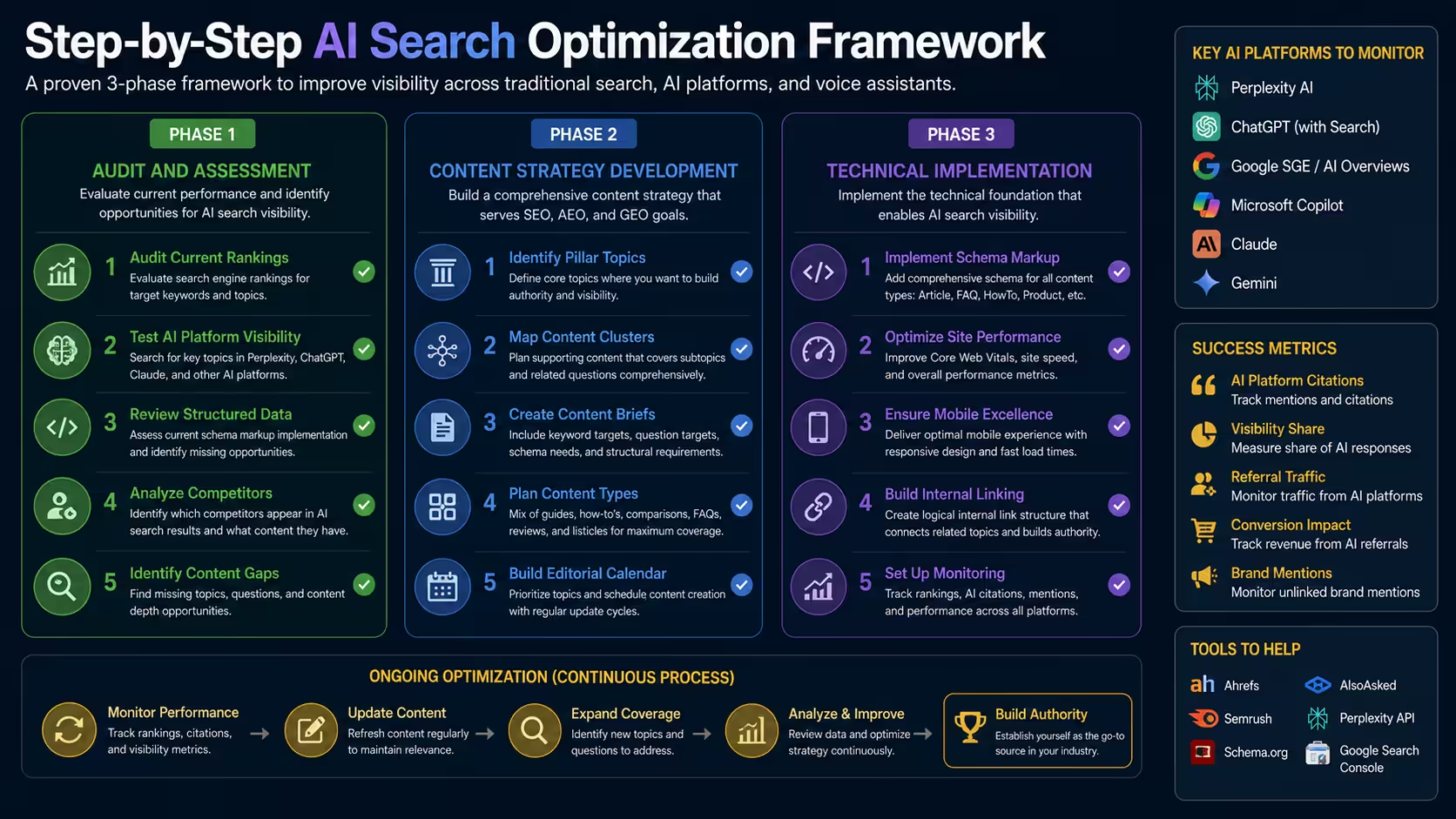
Step-by-Step AI Search Optimization Framework
Implementing comprehensive AI search optimization requires a structured approach. This framework provides actionable steps for businesses starting their AI optimization journey.
Phase 1: Audit and Assessment
Begin by evaluating current visibility across all search platforms. Check traditional Google rankings, featured snippet presence, and AI platform citations.
- Audit current search engine rankings for target keywords
- Test content visibility in AI platforms (Perplexity, ChatGPT)
- Review structured data implementation completeness
- Analyze competitor presence in AI search results
- Identify content gaps for comprehensive topic coverage
Phase 2: Content Strategy Development
Develop a content plan addressing optimization needs across SEO, AEO, and GEO. Identify pillar topics and supporting cluster content.
Create content briefs that specify optimization requirements for each piece. Include keyword targets, question targets, schema requirements, and structural guidelines.
Phase 3: Technical Implementation
Implement necessary technical optimizations before creating content. Ensure site infrastructure supports AI search optimization.
- Implement comprehensive schema markup across site
- Optimize site speed and core web vitals
- Ensure mobile experience excellence
- Create clear internal linking structure
- Set up monitoring for AI platform citations
Phase 4: Content Creation and Optimization
Create content following the established strategy. Optimize each piece for multiple platforms simultaneously.
Ensure every article includes clear structure, comprehensive coverage, answer-focused sections, and appropriate schema markup.
Phase 5: Monitoring and Iteration
Track performance across all search platforms. Monitor traditional rankings, featured snippet capture, and AI platform citations.
Analyze which content performs best in each channel. Identify patterns and apply insights to future content.
- Monitor Google Search Console data for traditional SEO
- Track featured snippet appearances in rankings
- Manually check AI platform citations regularly
- Analyze referral traffic from different sources
- Update and refresh content based on performance data
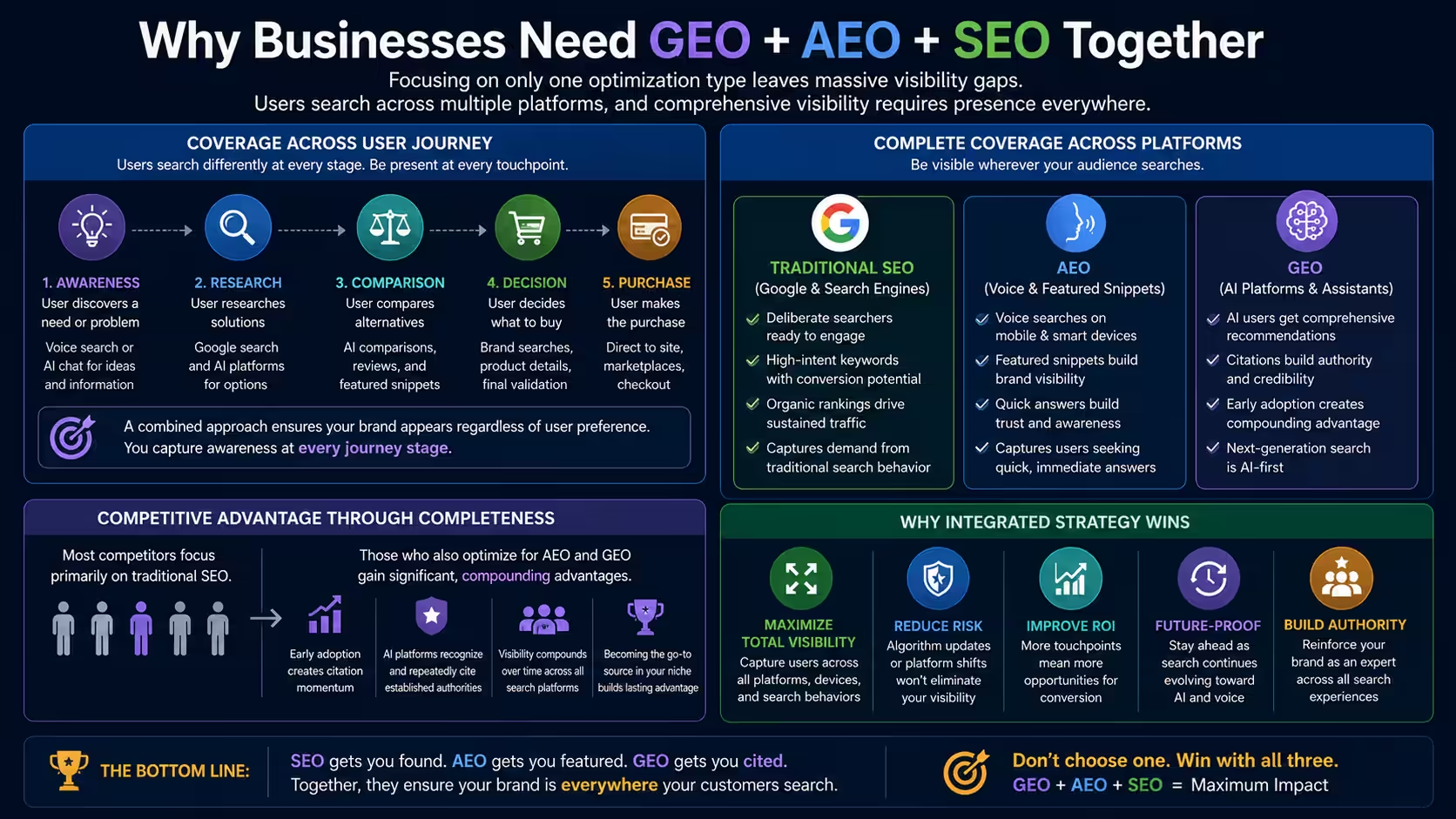
Why Businesses Need GEO + AEO + SEO Together
Focusing on only one optimization type leaves massive visibility gaps. Users search across multiple platforms, and comprehensive visibility requires presence everywhere.
Coverage Across User Journey
Different users prefer different search methods at different stages. Some start with Google searches. Others ask ChatGPT directly. Many use voice assistants for quick information.
A combined approach ensures your brand appears regardless of user preference. You capture awareness at every journey stage.
Competitive Advantage Through Completeness
Most competitors focus primarily on traditional SEO. Those who also optimize for AI search gain significant advantages.
Early adoption of GEO and AEO creates citation momentum. AI platforms recognize and repeatedly cite established authorities, creating compounding visibility.
- Traditional SEO captures deliberate searchers ready to engage
- AEO builds brand awareness through voice and featured snippets
- GEO establishes authority with next-generation AI users
- Combined approach maximizes total search visibility
- Integrated strategy future-proofs marketing investments
ROI and Resource Efficiency
Creating comprehensive content optimized for all platforms is more efficient than separate campaigns for each channel.
One authoritative article can rank in Google, win featured snippets, and get cited by Perplexity AI. This multiplies ROI from content investments.
Partner with AI SEO Experts Who Understand the Future
Don’t let your competitors dominate AI search while you’re left behind. TrySaleBooster delivers complete optimization—AEO, GEO, and SEO—tailored to your business goals. Our specialists understand how to maximize visibility across traditional search engines, voice assistants, and AI platforms.
Get Your AI SEO StrategyChat on WhatsApp
Explore our specialized services: AI SEO Services | Ecommerce SEO | GEO Optimization | AI Content Optimization
Frequently Asked Questions About AEO vs GEO vs SEO
What is the difference between SEO and AEO?
SEO (Search Engine Optimization) focuses on ranking high in traditional search engine results to drive website traffic. AEO (Answer Engine Optimization) targets platforms that provide direct answers to queries without requiring users to click through to websites. SEO aims for visibility in search result lists, while AEO optimizes for featured snippets, voice assistant responses, and knowledge panels where users get immediate answers. AEO content is typically more concise and answer-focused, while SEO content can be more comprehensive and engagement-driven.
What does GEO mean in marketing?
GEO stands for Generative Engine Optimization. It’s the practice of optimizing content to be cited by AI-powered platforms like ChatGPT Search, Perplexity AI, and Google AI Overviews. Unlike traditional search engines that display links or answer engines that extract existing content, generative engines create original responses by synthesizing information from multiple sources. GEO focuses on building authority and creating comprehensive content that AI systems recognize as trustworthy sources worth citing in their generated responses.
Is SEO dead because of AI?
No, SEO is not dead, but it’s evolving. Traditional search engines still drive massive traffic, and most online journeys begin with search queries. However, SEO alone is no longer sufficient for complete visibility. Businesses need to combine traditional SEO with AEO and GEO to maintain comprehensive search presence. AI platforms complement rather than replace traditional search. The most effective strategy integrates all three optimization approaches to capture users across different platforms and search behaviors.
How do AI search engines rank content?
AI search engines use natural language processing and large language models to evaluate content quality, relevance, and authority. They analyze semantic meaning rather than just matching keywords. Key ranking factors include domain authority, content comprehensiveness, factual accuracy, entity recognition, topical expertise, content freshness, and structured data implementation. AI systems also evaluate EEAT signals (Experience, Expertise, Authoritativeness, Trustworthiness) to determine source reliability. Clear content structure, thorough topic coverage, and verifiable information improve visibility in AI search results.
What is Generative Engine Optimization?
Generative Engine Optimization (GEO) is the practice of optimizing content specifically for AI platforms that generate original responses to user queries. This includes systems like ChatGPT Search, Perplexity AI, Google AI Overviews, Claude, and Gemini. GEO focuses on creating authoritative, comprehensive content with clear structure and strong expertise signals. The goal is getting cited as a source when these AI systems create responses. GEO differs from traditional SEO because it optimizes for AI citation and authority recognition rather than just search rankings.
How do I optimize for Google AI Overviews?
To optimize for Google AI Overviews, create comprehensive, authoritative content with strong EEAT signals. Implement structured data markup including Article, FAQ, and HowTo schema. Focus on thorough topic coverage that answers user questions completely. Ensure content ranks in top 10 organic results for target queries, as AI Overviews typically cite these pages. Build strong backlink profiles and demonstrate topical authority through interconnected content. Update content regularly to maintain freshness. Use clear heading structure and organize information logically so AI systems can easily parse and extract key points.
Can Perplexity AI drive traffic to my website?
Perplexity AI can drive traffic, though typically less than traditional search engines. The platform cites sources at the bottom of responses, and curious users may click through to learn more. However, the primary value of Perplexity citations is brand visibility and authority building rather than direct traffic. When your content gets cited repeatedly, users recognize your brand as an authority. This recognition leads to increased brand searches and direct traffic over time. The indirect benefits of Perplexity visibility often exceed direct referral traffic.
What is the future of SEO in the AI era?
The future of SEO involves integration with AI search optimization. Traditional ranking tactics remain important, but comprehensive visibility requires optimizing for AI platforms as well. Future SEO will emphasize semantic understanding, entity relationships, topical authority, and structured data. Multimodal search combining text, voice, and images will become standard. AI agents handling complex tasks will change how users discover and interact with brands. Successful SEO strategies will combine traditional optimization with AEO and GEO, creating content that performs well across all search platforms and AI systems.
Should businesses focus on AEO or SEO?
Businesses should focus on both AEO and SEO, plus GEO for complete visibility. Each optimization type serves different user behaviors and platforms. Traditional SEO captures users actively searching for information and ready to engage with websites. AEO builds brand awareness through voice search and featured snippets. GEO establishes authority with AI platform users. A combined approach maximizes total search visibility and future-proofs marketing investments. Resource allocation should typically be 50% traditional SEO, 25% AEO, and 25% GEO, adjusted based on specific business needs and audience behaviors.
How can brands get cited by AI tools?
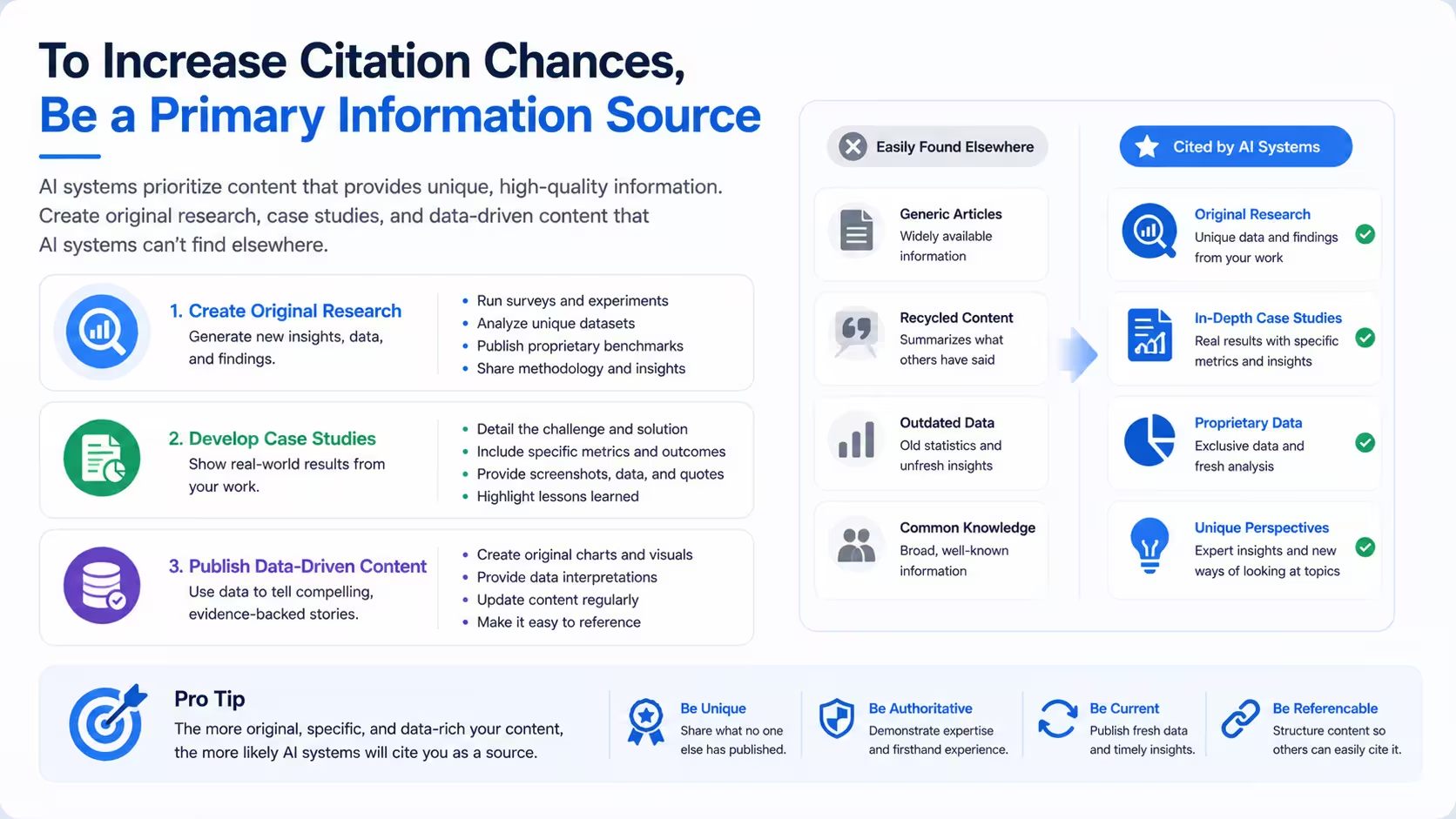
Brands can increase AI citation likelihood by creating authoritative, comprehensive content that demonstrates clear expertise. Implement complete structured data markup so AI systems easily understand content. Build topical authority through interconnected content clusters covering subjects thoroughly. Include original research, data, and unique insights AI platforms can’t find elsewhere. Ensure content is factually accurate and verifiable. Maintain strong domain authority through quality backlinks. Update content regularly to signal freshness. Use clear structure with proper heading hierarchy. Focus on being a primary information source for specific topics rather than general content creation.
Conclusion: Embracing Complete Search Visibility
The search landscape has fundamentally transformed. Success requires understanding and implementing three distinct optimization strategies: traditional SEO, Answer Engine Optimization, and Generative Engine Optimization.
Each strategy serves different platforms and user behaviors. Traditional SEO remains vital for website traffic from Google and other search engines. AEO captures voice search and featured snippet visibility. GEO establishes authority with AI platforms that increasingly dominate search.
Businesses that adopt comprehensive optimization strategies gain significant competitive advantages. They appear across all search platforms, capture users at every journey stage, and build authority that compounds over time.
The future belongs to brands visible everywhere users search. AI search platforms will continue growing. Voice assistants will handle more complex queries. Generative engines will become primary research tools for entire demographics.
Organizations that wait risk becoming invisible to these emerging search channels. Early adopters establish citation patterns and authority signals that become increasingly difficult for competitors to overcome.
The question isn’t whether to adopt AI search optimization. It’s how quickly you can implement comprehensive strategies that position your brand for success across all search platforms.
Disclaimer: AI search algorithms and ranking systems evolve continuously. Results may vary based on competition, authority, content quality, and optimization strategy. The information in this article reflects current best practices as of 2026 but should be adapted as technologies and platforms develop.
Start your AI search optimization journey today. Audit your current visibility, develop comprehensive content strategies, and implement technical optimizations that work across SEO, AEO, and GEO. The future of search is here, and comprehensive visibility requires action now.